Metal Joining - List of Manufacturers, Suppliers, Companies and Products

Metal Joining Product List

1~12 item / All 12 items

Displayed results

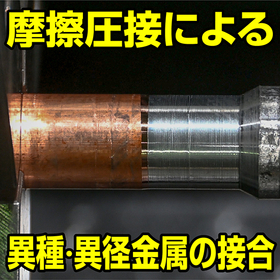
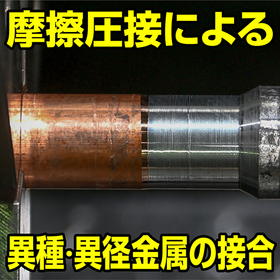
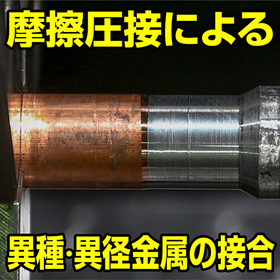
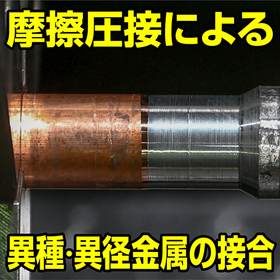
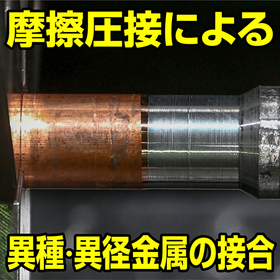
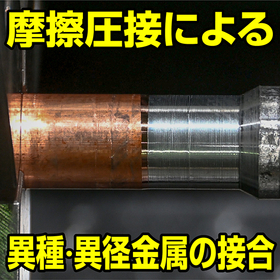
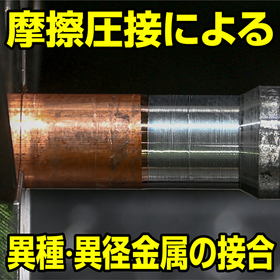
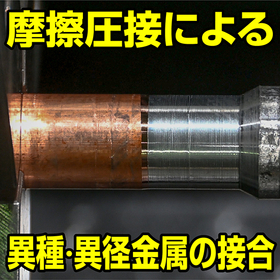
Joining of dissimilar and different diameter metals by friction welding <Large size OK>

Strongly bonding dissimilar metals. Reducing material loss and processing man-hours to achieve cost reduction.

Friction stir welding is a method that allows for the strong joining of dissimilar and different diameter metals by rubbing two types of base materials together at high speed to soften them and then applying pressure. It enables designs that leverage the characteristics of each material while minimizing material loss. By reducing the amount of expensive materials used and the effort required for processing, cost reduction is achievable. Our company conducts tests in accordance with JIS standards on the joints and performs ultrasonic testing (UT) to ensure a high level of quality assurance. 【Features】 ■ Capable of handling large sizes with pipe diameters of φ216.3, round bar diameters of φ80, and total lengths of up to 10,500mm. ■ Reduces the amount of expensive materials used, material loss, and processing effort, achieving cost savings. *For more details, please refer to the PDF document. Feel free to contact us with any inquiries.

  • Secondary steel products

Added to bookmarks

Bookmarks list

Bookmark has been removed

Bookmarks list

You can't add any more bookmarks

By registering as a member, you can increase the number of bookmarks you can save and organize them with labels.

Free membership registration

Joining of dissimilar and different diameter metals by friction welding for aerospace applications.

Strongly bonding dissimilar metals to meet the strength requirements of the aerospace field.

In the aerospace industry, lightweight design and high strength are required. The joining of dissimilar metals is important for meeting these demands by combining materials with different properties. Particularly in areas where high safety and reliability are required, such as aircraft fuselages and engine components, robust joining technologies are essential. Friction stir welding achieves high strength and reliability, meeting the stringent requirements of the aerospace field. 【Application Scenarios】 - Aircraft fuselage structures - Rocket engine components - Space station structures 【Benefits of Implementation】 - Increased design flexibility through the combination of dissimilar metals - Achieving both lightweight and high strength - Reduction in material costs and processing time

  • Secondary steel products

Added to bookmarks

Bookmarks list

Bookmark has been removed

Bookmarks list

You can't add any more bookmarks

By registering as a member, you can increase the number of bookmarks you can save and organize them with labels.

Free membership registration

Welding of dissimilar and different diameter metals using friction pressure welding for shipbuilding.

Strongly joining dissimilar metals to achieve improved corrosion resistance and cost reduction in shipbuilding.

In the shipbuilding industry, selecting materials with excellent corrosion resistance is crucial as a countermeasure against corrosion in marine environments. By combining dissimilar metals, it is necessary to leverage the characteristics of each material to achieve high corrosion resistance. Friction stir welding enhances design flexibility and expands material options by firmly joining different metals. This enables the improvement of corrosion resistance while reducing material costs and processing efforts. 【Application Scenarios】 - Joining of parts requiring corrosion resistance - Fabrication of components using dissimilar metals - Reduction in the usage of expensive corrosion-resistant materials 【Effects of Implementation】 - Achievement of high corrosion resistance - Reduction in material costs - Increased design flexibility

  • Secondary steel products

Added to bookmarks

Bookmarks list

Bookmark has been removed

Bookmarks list

You can't add any more bookmarks

By registering as a member, you can increase the number of bookmarks you can save and organize them with labels.

Free membership registration

Welding of dissimilar and different diameter metals by friction stir welding for the energy industry.

Strongly bonding dissimilar metals to reduce material loss and processing time, thereby lowering costs.

In the energy industry, there is a demand for the longevity of equipment and efficient operation. Particularly in components that combine different metals, the strength and durability of the joints are crucial. Traditional joining methods often lead to material waste and processing labor, resulting in increased costs. Our friction stir welding technology firmly joins dissimilar metals and minimizes material loss, addressing these challenges. 【Application Scenarios】 - Piping in power generation plants - Connection points in transmission equipment - Components related to renewable energy facilities 【Benefits of Implementation】 - Increased longevity of components - Reduction in material costs - Decrease in processing man-hours

  • Secondary steel products

Added to bookmarks

Bookmarks list

Bookmark has been removed

Bookmarks list

You can't add any more bookmarks

By registering as a member, you can increase the number of bookmarks you can save and organize them with labels.

Free membership registration

Dissimilar metal joining by friction welding for medical devices

Pursuing biocompatibility. Firmly bonding dissimilar metals to expand the possibilities of medical devices.

In the medical device industry, safety and durability are of utmost importance. In medical devices that require biocompatibility, the joining of dissimilar metals may be essential. The strength and reliability of the joints influence the performance and safety of the products. Friction stir welding firmly joins dissimilar metals and maximizes the properties of the materials, enhancing the design flexibility of medical devices. Our friction stir welding technology contributes to improving the safety and reliability of medical devices under a high-quality assurance system. 【Application Scenarios】 * Implants * Medical instruments * Surgical robots 【Benefits of Implementation】 * Improved functionality through combinations of dissimilar metals * Reduction in material costs * Extended product lifespan due to high joint strength

  • Secondary steel products

Added to bookmarks

Bookmarks list

Bookmark has been removed

Bookmarks list

You can't add any more bookmarks

By registering as a member, you can increase the number of bookmarks you can save and organize them with labels.

Free membership registration

Joining of dissimilar and different diameter metals by friction welding for machine tools.

Contributes to the performance improvement of high-precision machine tools by firmly bonding dissimilar metals.

In the machine tool industry, high precision and durability are required. By combining different metals, it becomes possible to design utilizing the characteristics of each material, contributing to the performance improvement of machine tools. In particular, strong joints are essential in areas subjected to high loads or where different materials need to be combined. Friction stir welding achieves high strength and reliability, leading to the longevity of machine tools. 【Application Scenarios】 - Joining of parts requiring high-precision processing - Manufacturing of machine tool components combining different metals - Realization of joints that can withstand high loads 【Benefits of Implementation】 - Improved product quality through high-precision joining - Expanded material options and increased design flexibility - Cost reduction while enhancing machine tool performance

  • Secondary steel products

Added to bookmarks

Bookmarks list

Bookmark has been removed

Bookmarks list

You can't add any more bookmarks

By registering as a member, you can increase the number of bookmarks you can save and organize them with labels.

Free membership registration

Joining of dissimilar and different diameter metals by friction welding for railways.

Strongly bonding dissimilar metals to contribute to the durability of railway structures.

In the railway industry, components with high durability are required to balance safety and long-term operation. Particularly at the joints of rails and wheels used in harsh environments, high strength and wear resistance are essential. Deterioration of these joints can lead to serious accidents and increase the costs associated with regular maintenance and replacement. Our friction stir welding technology firmly joins dissimilar metals, achieving high durability and enhancing the safety and economic efficiency of railway structures. 【Application Scenarios】 - Joining rails to rails - Joining wheels to axles - Joining components of overhead wires and signaling equipment 【Benefits of Implementation】 - Improved safety through increased joint strength - Cost reduction by minimizing material loss - Reduced operational costs by decreasing maintenance frequency

  • Secondary steel products

Added to bookmarks

Bookmarks list

Bookmark has been removed

Bookmarks list

You can't add any more bookmarks

By registering as a member, you can increase the number of bookmarks you can save and organize them with labels.

Free membership registration

Dissimilar metal joining by friction welding for plants

Contributes to the longevity of plant equipment. Achieves cost reduction as well.

In the plant industry, long-term stable operation of equipment is required. Especially for piping and structural materials used in high-temperature and high-pressure environments, high strength and corrosion resistance are essential. Poor bonding of dissimilar metals can lead to early deterioration of equipment and accidents. Our friction stir welding technology firmly joins dissimilar metals and contributes to the longevity of plant equipment. 【Application Scenarios】 * Repair and renewal of piping * Manufacturing of structural materials combining dissimilar metals * Measures for corrosion-prone areas 【Effects of Implementation】 * Improved equipment operating rate * Reduced maintenance costs * Enhanced safety

  • Secondary steel products

Added to bookmarks

Bookmarks list

Bookmark has been removed

Bookmarks list

You can't add any more bookmarks

By registering as a member, you can increase the number of bookmarks you can save and organize them with labels.

Free membership registration

Joining of dissimilar and different diameter metals by friction welding for semiconductor manufacturing.

Improving the reliability of semiconductor devices through precision bonding while also achieving cost reduction.

In the semiconductor manufacturing industry, precise joining of dissimilar metals is essential due to the miniaturization and high performance of devices. The reliability of the joints significantly affects the performance of the products, thus high quality is required. Friction stir welding is suitable for the manufacturing of semiconductor devices as it firmly joins different metals and maximizes material properties. Our friction stir welding technology achieves high-quality joints and contributes to improving product reliability. 【Application Scenarios】 - Joining of components in semiconductor manufacturing equipment - Connection of electronic components - Manufacturing of devices using dissimilar metals 【Effects of Implementation】 - Improved joint strength - Reduction in material costs - Enhanced product reliability

  • Secondary steel products

Added to bookmarks

Bookmarks list

Bookmark has been removed

Bookmarks list

You can't add any more bookmarks

By registering as a member, you can increase the number of bookmarks you can save and organize them with labels.

Free membership registration